Wardrobe Whispers: What Every Stitch in 'Kiss Me Kill Me' Is Trying to Tell You
Here's a fun party trick for your next movie night: mute a thriller ten minutes in and try to guess who's about to ruin everyone's life. If the costume department did its job, you'll get further than you think.
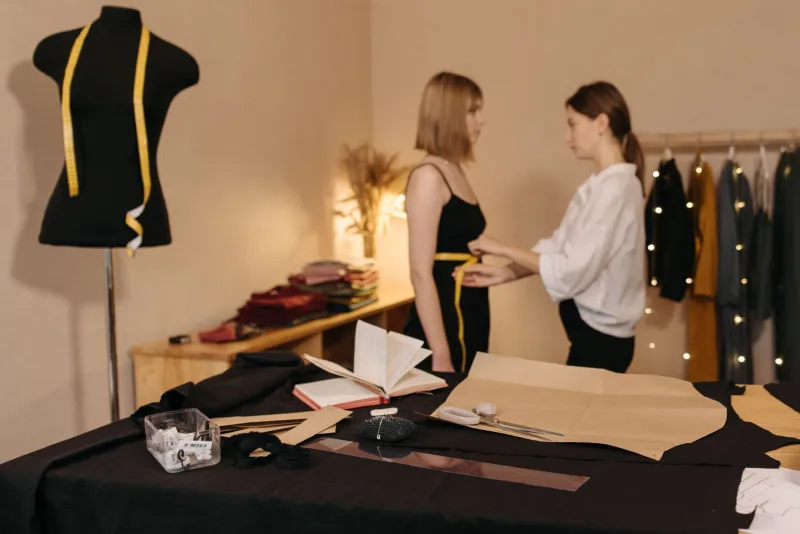
In 'Kiss Me Kill Me,' the wardrobe is basically a second script — one that most viewers read subconsciously and our costume designer, Dana Reyes, wrote on purpose. "A thriller gives you maybe ninety minutes to plant a whole conspiracy," she told us over coffee. "The clothes have to do the quiet work while the dialogue does the loud work."
The Villain's Problem: Being Too Perfect
Start with the obvious suspect. There's a reason movie villains rarely have a wrinkle out of place. Flawless tailoring reads as control, and in a genre built on secrets, control is the tell.
For our antagonist, Reyes built a palette of cool grays and bone whites — colors that photograph beautifully and feel emotionally vacant. "Nobody's lying in beige," she laughs. "The polish is the point. When a character looks that composed while everything around them is falling apart, the audience's gut clockes it before their brain does."
The trick is calibration. Too sinister and you spoil the twist; too warm and the reveal lands flat. Reyes describes the final look as "the kind of person you'd trust with your house keys. That's the costume doing its job."
Dressing the Doomed
Our ill-fated lover gets the opposite treatment: a palette that starts soft and slowly drains. Early scenes lean into warm coral and blush — colors coded as romance, openness, vulnerability. Scene by scene, those hues cool toward muted mauve and, eventually, a gray so quiet you almost don't notice the character disappearing into it.
"You're telling the audience the ending without saying a word," Reyes explains. "The first time through, they feel it. The second time through, they see it."
That's the whole game, honestly. Thriller costuming is engineered for the rewatch — a second viewing turns every outfit into a receipt.
A Viewer's Field Guide to Visual Foreshadowing
Want to spot the con before the script lets you? Keep these tells in your back pocket:
- The costume that never changes. If a character wears the same silhouette in every scene, they're not evolving — they're hiding.
- A sudden color shift. When someone who's lived in neutrals shows up in red, something has happened. Pay attention.
- The too-tidy outfit at the wrong moment. Fresh blazer at a crime scene? That's not a coincidence; that's a clue wearing a lapel pin.
- Costume mirroring. When two characters start dressing alike, one of them is absorbing the other — or replacing them.
- The accessory close-up. If the camera lingers on a watch, a ring, a scarf, it's not a fashion moment. It's evidence.
Run these against 'Kiss Me Kill Me' on your second watch and try not to feel smug. We dare you.
Why Indie Thrillers Get More Out of a Wardrobe
Big-budget productions can buy atmosphere with VFX and location shoots. An indie thriller like ours has to squeeze every drop of meaning from what's already in frame — and that makes costume design a superpower rather than a garnish.
"On a smaller film, every dollar on screen has to justify itself," Reyes says. "So the clothes carry theme. They carry arc. They carry the lie. You get very good at making one coat do three jobs."
That resourcefulness is part of what gives indie thrillers their texture. The wardrobe isn't decoration; it's load-bearing.
Your Homework
So here's the assignment: stream 'Kiss Me Kill Me' once for the plot. Then run it back and watch the clothes instead. Track the color drift. Note the outfits that never wrinkle. Watch who dresses like who by the final act.
The best thrillers don't just keep secrets — they hide them in plain sight, right there on the hanger. All you have to do is look.