No Soundstage, No Problem: The Real Places Where Indie Dread Lives
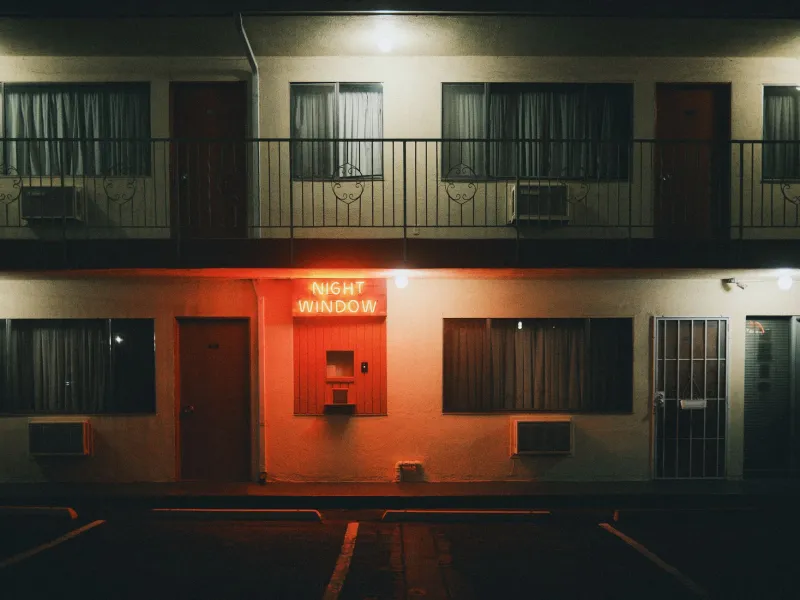
There's a moment in every great indie thriller when you stop watching the actors and start watching the walls. The water stain above the bed. The flickering bar sign bleeding neon through cheap curtains. The emptiness of a two-lane road at dusk. Studio films can build any of these on a lot — but they can't make them feel lived in, or died in.
The Location Is a Character (Whether You Cast It or Not)
Big-budget productions treat locations as backdrops. Indie thrillers treat them as accomplices. When your budget can't afford a fog machine and a crane shot, the environment has to do the heavy lifting — and real places come pre-loaded with atmosphere no art department could fake on a Tuesday reshoot.
Think about the classics. The Bates Motel wasn't a set piece you could tour; it was a deliberately ordinary roadside stop that made the horror feel possible. Blue Velvet didn't need a soundstage suburb — it needed Lumberton to feel like a town you'd driven through a hundred times without noticing. Real locations carry a patina of other people's lives, and that's exactly what makes an audience uneasy. Somebody else slept in that bed. Something happened in that room. Maybe it's still there.
Motels, Bars, and Back Roads: The Indie Thriller Trinity
Ask any low-budget filmmaker and they'll tell you the same thing: you go where the locations are cheap and the dread comes free.
The motel is the undisputed king. Transient by design, anonymous by nature — a place where nobody asks questions and nobody would notice your absence. It's a narrative cheat code: characters have a built-in reason to be there, and the audience has a built-in reason to worry.
The bar runs a close second. Dim lighting solves a hundred budget problems, and a room full of strangers watching your protagonist is tension you don't have to write.
The back road might be the most underrated of all. Empty highways in the American West or a pine-lined county route in the Southeast do something no set can: they promise that help is far away. Cell signal bars dropping to one is all the exposition a thriller needs.
Where 'Kiss Me Kill Me' Shot Its Secrets
For our own production, the location hunt was less about finding pretty backdrops and more about finding places with something to hide. The central bar scenes were shot in a real neighborhood joint that's been pouring drinks since before the crew was born — the kind of place where the booths have grooves worn into the vinyl and the light fixtures hum just slightly out of sync. No set designer could replicate twenty years of spilled whiskey and whispered arguments.
The apartment sequences leaned on a rented unit with genuinely odd architecture — a hallway that's a few degrees too narrow, windows that face a brick wall three feet away. The director's note to the crew was simple: don't fix anything. Every weird angle stayed in frame.
And the roadside scenes? Shot on an actual stretch of rural highway where the nearest town was twenty minutes back the other way. The cast has said in interviews that the isolation wasn't acting. When the sun dropped and the crew packed up, nobody lingered at that location longer than they had to.
Location Scouts: The Unsung Heroes of Suspense
Here's a name you'll never see on a poster: the location scout. Yet in indie thrillers, scouts may matter more than the composer or the costume designer. They're the ones who walk into a stranger's motel and see a murder scene. Who know which county sheriff's offices will permit a night shoot and which will shut you down by sundown. Who can smell water damage and know it reads as menace on camera.
A great scout negotiates access, manages neighbors, tracks sun angles across a shooting day, and — most importantly — understands the story well enough to know that a kitchen isn't just a kitchen. It's where the secret gets told. Or buried.
Why It Works on the Audience
There's a psychological term filmmakers love: the uncanny familiar. We're unsettled not by places that look evil, but by places that look almost normal. A real diner, a real rest stop, a real apartment complex — your brain recognizes them from your own life, then flags them as wrong because of what the story is doing inside them.
That's the indie thriller's secret weapon. Hollywood can spend $200 million building a villain's lair. A scrappy production can spend a weekend's motel rate and get something scarier: a room you swear you've stayed in before.
When you watch 'Kiss Me Kill Me,' keep an eye on the walls. They know more than the dialogue lets on.