More Than a Pretty Poison: The Dangerous Woman Gets a Rewrite in Today's Indie Thrillers
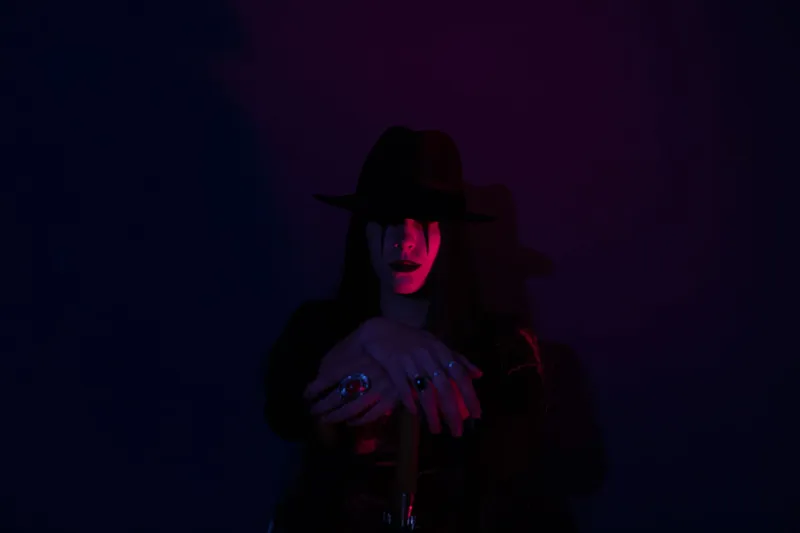
She showed up in the 1940s with a cigarette, a secret, and a body count. Eighty years later, she's still showing up — but she's got a therapist now. Maybe a backstory that actually explains the body count. The femme fatale, long the most seductive and most flattened character in American cinema, is having a quiet renaissance in indie thrillers, and honestly? It's about time.
The Original Blueprint
Classic noir gave us the archetype wholesale: the woman whose kiss is a trap and whose motives are, by design, unknowable. Rita Hayworth in Gilda. Barbara Stanwyck in Double Indemnity. Jane Greer in Out of the Past. These women were magnetic, terrifying, and — here's the catch — almost always written from the outside in. They existed to punish the male protagonist for his desires. Their interior lives? Thin as the shadows they were photographed in.
That formula worked for decades because it was never really about the woman. She was a plot device with lipstick.
The Pivot Point
The 1990s tried to reclaim her — Body Heat, The Last Seduction, Basic Instinct — but mostly by cranking the shock value. The real shift came when filmmakers started asking a different question: what if she's not a mystery to be solved, but a person to be understood?
Look at what indie cinema has been doing lately. Films like The Girl on the Train-adjacent psychological dramas, A Simple Favor, Piercing, Cam — these movies hand their dangerous women agency, contradiction, and crucially, reasons. The secrets they keep are load-bearing. The betrayal often has a logic rooted in survival, not in some mythic malevolence.
Where 'Kiss Me Kill Me' Fits In
That tradition is exactly the soil our film grew from. One kiss. One secret. No way out — but whose secret, and whose way out?
"I never thought of her as a femme fatale," says our lead, who plays the film's enigmatic center of gravity. "I thought of her as someone who made one catastrophic decision and is now three moves ahead just trying to survive it. The danger is real, but it's reactive. That felt more honest to me than the old version, where the woman is just evil with good eyebrows."
Her co-star, who plays the man caught in the orbit, puts it another way: "In the old noirs, the guy is the audience surrogate and the woman is the trap. In this movie, they're both the trap. For each other. That's the fun of it."
Director notes back this up. The script reportedly went through drafts where the big reveal painted the female lead as a cold orchestrator — until the filmmakers realized the movie was more unsettling, and more tragic, when her secret made horrible sense. Moral complexity isn't a softening of the archetype. It sharpens it.
Complexity Is the New Venom
What's striking about the modern dangerous woman is that her unpredictability comes from sympathy, not despite it. When you understand why she's lying, every lie lands harder. Contemporary thrillers have figured out that backstory isn't a spoiler of menace — it's fuel for it.
Think of Charlize Theron in Young Adult or the tangled leads of Gone Girl — women written with interiority so sharp the audience can't decide whether to root for them or lock the door. That ambivalence is the genre's new engine.
"The archetype used to be a warning to men," our lead laughs. "Now it's more like a mirror. And mirrors are scarier."
The Kiss, Reconsidered
So where does that leave the kiss — the genre's signature move? In classic noir, it was the moment the protagonist lost control. In the new wave, it's more of a negotiation. A gamble. Sometimes even a mistake the woman regrets, which was basically unheard of back when she was required to be a force of nature rather than a person.
In Kiss Me Kill Me, that single moment of intimacy is the hinge the whole plot swings on — and like everything else in the film, it cuts both ways. No one walks away clean. No one is just a device.
The dangerous woman of 2020s indie cinema isn't deadlier than her 1946 counterpart. She's just finally allowed to be human. Turns out that's the most dangerous upgrade of all.