The Ears Know First: Why a Film Score Spills the Secrets Before the Dialogue Does
There's a moment that happens in almost every great thriller. You can't point to it in the script. You probably can't even describe it after the credits roll. But somewhere in your gut, you knew. You knew she wasn't telling the truth. You knew that phone call was going to end badly.
Chances are, your ears told you before your brain caught up.
In big-budget Hollywood thrillers, dread gets purchased — with orchestras, with famous composers, with a mixing budget the size of a small nation's GDP. In indie thrillers, where nobody's renting the London Symphony, the score has to work smarter. It has to whisper the plot.
Music as a Snitch
Think of a film score as an unreliable narrator in reverse. The characters lie. The visuals distract. But the music? The music is contractually obligated to be honest with you — just honest in a language you don't consciously speak.
Composers call these foreshadowing cues "planting," and the technique is older than talking pictures. A seemingly romantic string line under a first-date scene that's been bent a half-step out of tune. A synth drone that creeps in under a friendly conversation like smoke under a door. The audience doesn't register it as information. They register it as unease.
John Williams famously did this with a two-note motif in Jaws — the shark didn't need to be on screen because the score could stand in for it. Indie composers work the same muscle with even less. Where Williams had a full orchestra, a micro-budget composer might have one modular synth, a cello, and a friend who owns a bowed guitar.
Sometimes that constraint is the secret weapon.
Less Is Dread
Ask any indie sound designer what they're fighting and they'll say the same thing: the temptation to score everything. When you've got a composer on set for a weekend and a hard drive full of loops, the easy move is wall-to-wall music. The smart move is silence.
The best low-budget thrillers of the last decade — think Blue Ruin, The Guest, A Girl Walks Home Alone at Night — understand that a needle-drop or a single sustained tone hits hardest when it's surrounded by dead air. Silence is the canvas. The cue is the knife.
There's also the matter of instrumentation as characterization. A character who gets associated with warm, acoustic textures is telling you something. A character who arrives with glassy, digital textures — detuned, slightly wrong — is telling you something else. Audiences don't need a film theory degree to feel that shift. They just need forty minutes of exposure to it.
What We Did With 'Kiss Me Kill Me'
We won't spoil the mechanics of our third act, but here's what we can say: our composer built the entire score around a single melodic phrase that appears three times over the course of the film. The first time, it's played straight — tender, almost naive. The second time, one note has changed. Just one. Most viewers will never consciously notice.
They'll feel it.
By the third appearance, the phrase has been inverted entirely, and that's the moment the audience finally understands what the music has been trying to tell them since minute twelve. In test screenings, the reaction was consistent: people described a feeling of "oh no" several seconds before anything happened on screen. That's the score doing its job — being the one character in the movie who never lies to you.
Listen Closer on Your Next Watch
Want to train your ear? Try this with any thriller you love:
- Notice when music starts under dialogue. If a scene is just people talking but the strings are quietly freaking out, somebody in that scene is hiding something.
- Track a character's instrument. Composers often assign textures to characters. When the texture changes, so has the character.
- Fear the major key. Genuinely. Some of the most unsettling moments in thriller history are set to cheerful, consonant music. Happiness in a thriller score is a red flag wrapped in a bow.
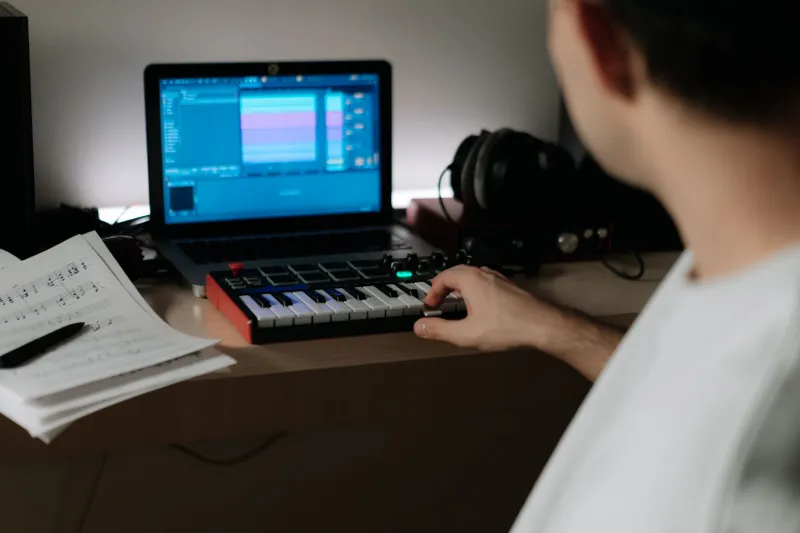
The next time you watch a thriller and feel your stomach drop before anything has happened — don't credit the screenwriter. Credit the person in the corner with the synthesizer, quietly telling you exactly how it all ends.
Score to die for, indeed. Turn it up.