Choreographing a Kiss Like a Car Crash: Inside Our Most Dangerous Two Minutes
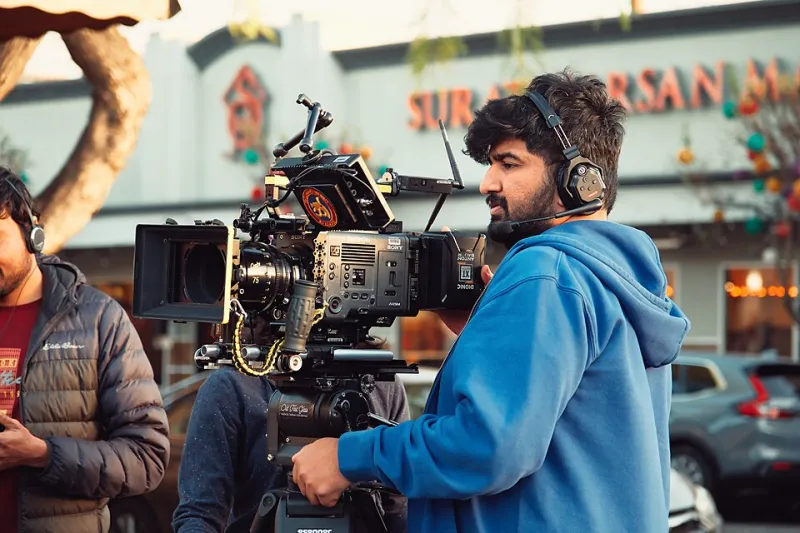
Photo: Nandancine, CC BY-SA 4.0, via Wikimedia Commons
There's a moment about seventy minutes into Kiss Me Kill Me where the audience stops breathing. We know, because we watched it happen in test screenings — a whole theater leaning forward at the same time. It's the kiss. Not the romantic one from the first act. The other one.
What nobody in that audience knows is that the scene was choreographed with the same precision as a car stunt. Every hand placement, every head angle, every breath was mapped out in advance. Here's how we pulled it off without a single bruise (well, almost).
A Kiss Is Just a Fight Scene With Softer Lighting
That's what our stunt coordinator kept repeating during pre-production, and honestly? She was right. The scene plays like a struggle, but it's staged like a dance. We broke it down into counts — literally, like a musical number. Eight counts to the wall. Four counts for the grab. Two counts for the kiss itself, which sounds quick until you realize we shot it forty-something times.
Our intimacy coordinator and stunt coordinator worked side by side, which isn't standard on most indie sets but should be. One handled consent and comfort; the other handled physics. Between them, they built a sequence where our two leads always knew exactly where the other person's hands would be. No surprises. Improvisation is great for arguments on screen — not for choreographed violence.
Rehearsal Week: Weirdly Wholesome, Deeply Uncomfortable
We rehearsed the scene for four days before anyone touched a camera, in an empty rehearsal space in Queens with yoga mats on the floor. The first day was almost entirely talking. Where is this character okay being touched? Where is the line? What happens if someone's neck is at the wrong angle for a take that runs long?
By day three, our leads were running the sequence in total silence, full speed, counting under their breath. One of them described it later as "the least sexy make-out of all time, and I mean that as a compliment." That's the paradox of the scene: to make it look raw and unplanned, it had to be the most planned thing in the entire movie.
The Safety Stuff Nobody Sees
A few things we built into the choreography that you'd never spot on screen:
- A hidden knee pad taped to the costume — the wall in that scene is real brick, and real brick does not negotiate.
- A hand signal system — a double tap on the shoulder meant "ease up," no matter what was happening in character.
- Hard out-of-bounds zones for grips and pressure, agreed on before rehearsals even started.
- Mandatory breaks every third take, because fatigue is how accidents happen, and adrenaline makes actors lie about being fine.
The crew called the scene "the waltz" for the whole shoot, partly for discretion, partly because it genuinely had a tempo. The sound mixer still has the counts stuck in her head.
Making It Believable, Take After Take
Here's the hard part, according to our cast: safety protocols can flatten a performance. When you know exactly what happens next, how do you look terrified?
Our leads' answer was emotional anchoring — each take, they'd fixate on a different internal beat. One take was about betrayal. The next was about bargaining. The choreography never changed; the meaning underneath it did. If you watch the final cut closely, you can actually see the shift — the same physical sequence, but the eyes tell a different story each time. We kept the take where the fear arrived a half-second early, because it felt true.
One Bruise, One Story
We'll admit it: there was exactly one minor injury in the whole shoot, and it happened when an actor got too committed on take thirty-eight and clipped their own elbow on the brick. The take was unusable — too much reality. Which tells you everything about the line we were walking the entire time.
The scene works because it looks like it could go wrong at any second. It doesn't work because anything actually did. That's the trick of a good thriller, and honestly, of good filmmaking in general: the audience should feel like anything can happen, while everyone on set knows precisely what will.
Come see how it turns out. Bring someone you trust. Maybe hold their hand instead.