Before the Cameras Rolled: How One Chemistry Read Changed Everything About Our Ending
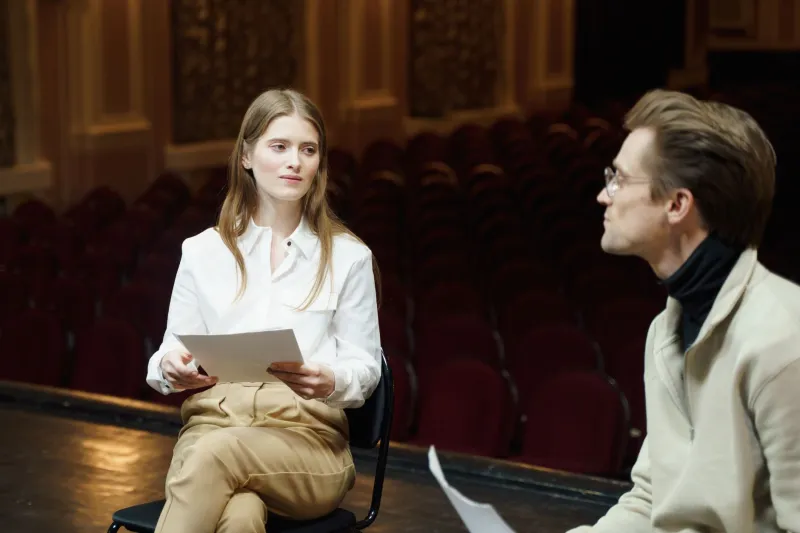
There's a moment in every indie production — usually around the time the money is barely there and the schedule is already falling apart — when you realize the script you've been protecting for two years isn't actually the movie you're making. For us, that moment happened in a borrowed casting office in Burbank, with folding chairs, lukewarm coffee, and two actors reading our script aloud for the very first time.
We thought we were auditioning them. Turns out, they were auditioning the ending.
The Script Said One Thing. The Room Said Another.
On the page, our story was a fairly straightforward setup: a stranger, a motel, a kiss that doubles as a trap. The character who pulls the trigger — figuratively, then literally — was supposed to be obvious by page 40. We'd built the whole reveal around one performance: whoever played that role had to keep the audience leaning in without ever tipping their hand.
Then our lead walked in for the read-through and did something no draft of the script had anticipated. She paused. A beat too long, we thought at first. But the pause made the other character react — and suddenly the power dynamic on page 12 was different than the one we'd written. The person we'd framed as the predator suddenly looked like the one being hunted. Everyone in the room felt it.
Our director, who had been defensive about the script for months, put down his coffee and said the five words every screenwriter both fears and lives for: "Wait. Run it again."
Chemistry Reads Are Where the Real Casting Happens
Solo auditions tell you if someone can act. They tell you almost nothing about whether two people can lie to each other convincingly — which, for a thriller like ours, is the entire ballgame. A kiss on screen is a negotiation between two faces, and if one of them isn't selling the secret, the audience checks out before the body drops.
So we did what indie productions do: we stacked four chemistry reads into a single weekend and let the pairs collide. Some combinations were technically excellent and emotionally dead. One pairing was so warm it would've played as a rom-com with a body count — not the tone we wanted, but a genuinely instructive failure. The right match, when it finally happened, had the opposite quality: warmth with a hairline fracture running through it. You wanted to trust them. That was the trick.
Here's what nobody tells first-time producers: the wrong face can sink a film's biggest secret. Not a bad face — a readable one. If your audience clocks the twist on the poster, you've got a problem no editor can fix in post.
When the Actors Rewrite the Movie
By the final read-through, we'd made three changes that never existed in any draft:
- The reveal moved. What was a third-act confession became a second-act slip — a single line delivered like a throwaway, because our actor refused to play it as a bombshell.
- A character flipped. The ally became ambiguous, not because we rewrote her scenes, but because the casting made every existing scene double-read.
- The ending got quieter. Our original finale was loud and bloody. The chemistry in the room argued for something colder. We listened.
None of this shows up in the credits. There's no "casting consultant" line in the end crawl. But the movie you'll eventually stream is, in a very real sense, a collaboration between the script and the people who ended up in it.
Why Indie Thrillers Live or Die in That Room
Big studio films can paper over a miscast with coverage, reshoots, a marquee name, a killer score. We had none of those safety nets. What we had was a weekend, four pairs of actors, and a script that was flexible enough to bend toward the truth the room kept finding.
If you catch 'Kiss Me Kill Me' when it lands — and we hope you will — watch the second-act slip. That line that plays like nothing? It's the loudest thing in the movie. And it only got there because two actors, in a hot room in Burbank, refused to say it the way we wrote it.
Casting isn't pre-production. On an indie thriller, it's the first rewrite — and sometimes the best one you'll ever get.