Every Alibi Needs a Witness: Inside the Background Roles That Sell 'Kiss Me Kill Me's Biggest Lie
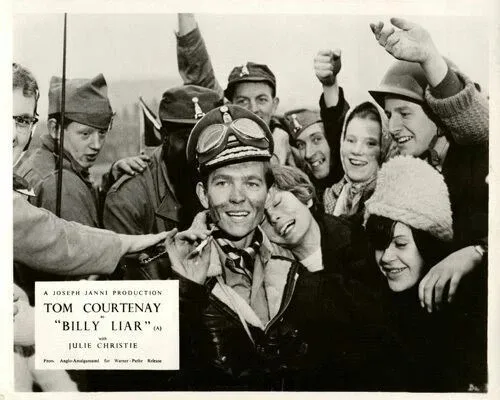
Photo: Warner Bros. Pictures, Public domain, via Wikimedia Commons
There's a scene in the first act where our lead sits in a diner and orders coffee. It's a completely ordinary scene, which is why it cost us more rehearsal time than the climax.
Because the climax is a closed loop. Two people, one room, no witnesses. The diner is the opposite. The diner has to feel like a real place with real people in it who have nothing to do with any of this. If the diner feels staged, the audience starts doing math about the room instead of the story. If the diner feels lived in, the audience relaxes — and a relaxed audience is a vulnerable one.
That's the job. Our background players build the alibi. They make the world look normal so we can wreck it later.
The rule we gave everybody on day one
Our second AD opened every extras briefing with the same line, and it stuck: You are not here to be seen. You are here to be believed.
Extras in a thriller get into trouble when they try to act. You can spot it instantly — a bartender wiping the same spot on the bar for six takes, a pedestrian who waits for the perfect moment to cross. Real rooms don't work like that. Real rooms are full of people who are mildly inconvenienced by their own lives.
So we gave them tasks instead of emotions. Fold this. Count that. Spoon sugar into a cup that's already full. Stand in a doorway with your weight on your back foot, on your phone, barely aware of anything. The goal was never personality. The goal was the specific, boring, unremarkable fact of a person being in a place they've been in a hundred times before.
The man who wasn't reading his paper
Here's the one we didn't plan.
In the diner sequence there's a guy in the booth behind our lead — mid-fifties, ball cap, folded newspaper. He's in frame for maybe four seconds across two shots. You will not remember him. That's fine. He's not the point of the shot.
Except this: the first time he appears, he's holding the newspaper. The second time, the paper's folded on the table and he's looking at the door.
We didn't write that. He set the paper down between setups because his arm got tired, and our director noticed it in the edit and moved the second shot to a later take on purpose so the continuity break stayed in. It's not a clue. There's nothing to solve. But when audiences rewatch the movie — and our comment section suggests a lot of people are rewatching the movie — that's the beat where the mood shifts for them without them being able to say why.
One guy putting down a newspaper. That's the misdirection. It costs nothing and it works like a mousetrap.
Casting ordinary is harder than casting memorable
People assume background casting is the easy part. It's the opposite.
A face that reads as a type pulls focus. You want the movie's world to feel like it has no interiority beyond what our leads are experiencing. So we looked for people whose faces resolved quickly and then stopped being interesting — which sounds mean until you understand it's a compliment. It means you look like an actual human who exists when the camera isn't pointed at you.
We pulled from local theater groups, a university's film program, and a very patient mailing list of people who'd worked on two of our earlier shorts. Roughly two-thirds of the background cast had never been on a professional set. They were, on average, better at this than the two-thirds who had.
Directing someone like they're hiding something
Here's the trick, and we're happy to give it away because it's not really a trick.
We gave the background players slightly more information than their role required. A waiter got told whose order he was nervous about getting wrong. A neighbor got told she was supposed to be somewhere else twenty minutes ago. Nobody acted on it. But posture follows information. So there's a low hum of unfinished business in every wide shot, and audiences read that as unease without ever being able to point at it.
That hum is doing the heaviest lifting in the film. It's why the wide shots don't feel like a stage play. It's why the empty streets later in the movie feel like a threat instead of a budget constraint.
Why the alibi has to be boring
A thriller's first act is essentially a promise: everything is fine, everything is fine, everything is fine. You can't make that promise with production design alone. A nice-looking restaurant is still just a nice-looking restaurant.
You make it with a busboy who has clearly been on shift for six hours. A woman at a crosswalk who checks her watch twice. A guy on a porch who's technically watering a plant that's already dead.
Those people are the alibi. They're the reason the world feels safe enough that what happens next actually registers as a violation. When the tension snaps — and it does snap — you're not scared because the movie told you to be. You're scared because the room got quiet and someone who was supposed to be there isn't.
Your second-watch assignment
If you've already seen it once, do this: pause on any wide shot and count the people who aren't doing anything that matters. Then look at where they're facing.
About half of them are facing slightly the wrong way. It's not a code. There's no hidden map. It's just the texture of a real room, where not everyone is looking at the same thing at the same time — and where somebody, somewhere in the frame, is always looking at the door.
Nobody remembers their faces. That's how we knew it worked.